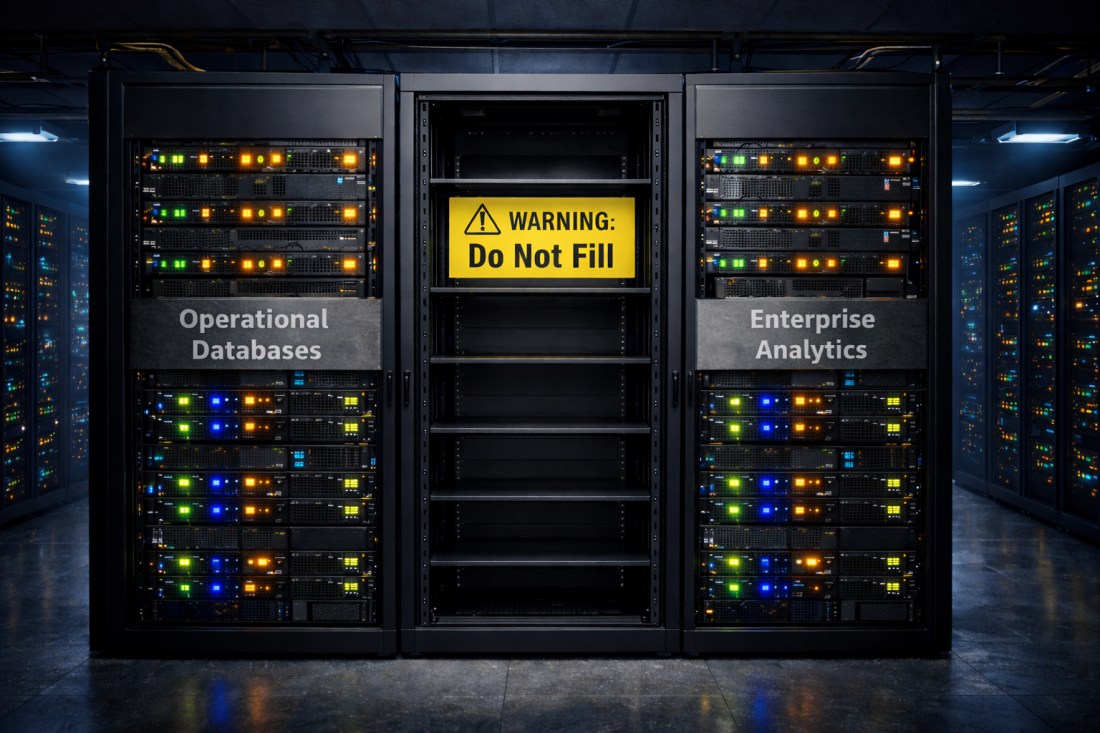
Inferencing Is a Database Problem Disguised as an AI Problem

AI inferencing reframed as a database performance problem – latency, concurrency and data access patterns under real-time machine workloads

I have a habit of becoming interested in technology trends only once they collide with reality. Flash memory wasn’t interesting to me because it was new – it was interesting because it broke long-held assumptions about how databases behaved under load.

Cloud computing wasn’t interesting to me because infrastructure became someone else’s problem. It became interesting when database owners started making uncomfortable compromises just to get revenue-affecting systems to run acceptably in the cloud. Compute was routinely overprovisioned to compensate for storage performance, leading to large bills for resources that were mostly idle. At the same time, “modernisation” began to feel less like an architectural necessity and more like a convenient justification for expensive consultancy services.

And now, just when I thought flashdba had nothing left to say, AI is following the same path.


We’ve Seen This Movie Before

For the last couple of years, most of the attention has been on training. Bigger models, more parameters, more GPUs, massive share prices. That focus made sense because training is visible, centralised and easy to reason about in isolation. But as inferencing starts to move up into the enterprise, something changes.

In the enterprise, inferencing stops being an interesting AI capability and starts becoming part of real business workflows. It gets embedded into customer interactions, operational decisions and automated processes that run continuously, not just when someone pastes a prompt into a chat window. At that point, the constraints change dramatically.

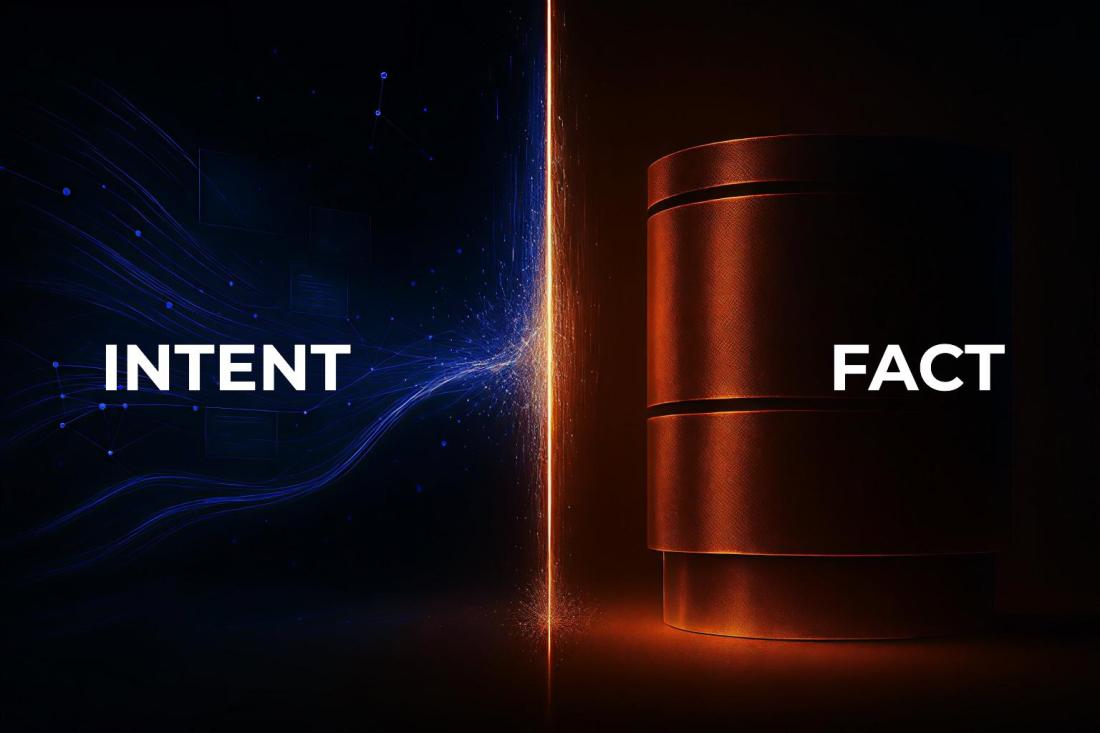
Enterprise inferencing is no longer about what a model knows. It is about what the business knows right now. And that is where things begin to feel very familiar to anyone responsible for systems of record.

Because once inferencing depends on real-time access to authoritative operational data, the centre of gravity shifts away from models and back towards databases. Latency matters. Consistency matters. Concurrency matters. Security boundaries matter. Above all, correctness matters.

This is the point at which inferencing stops looking like an AI problem and starts looking like what it actually is: a database problem, wearing an AI costume.


Inferencing Changes Once It Becomes Operational

While inferencing remains something that sits at the edge of the enterprise, its demands are relatively modest: a delayed response is tolerable… slightly stale data is acceptable. If an answer is occasionally wrong, the consequences are usually limited to a poor user experience rather than a failed business process.

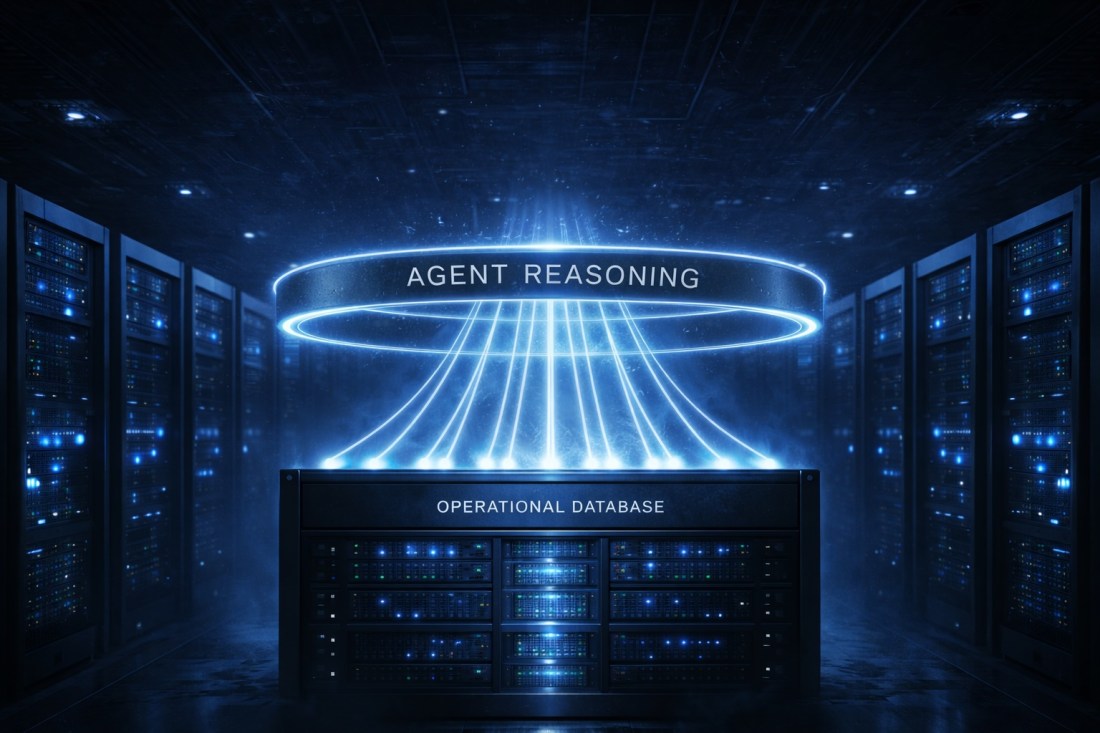
That changes quickly once inferencing becomes operational. When it is embedded directly into business workflows, inferencing is no longer advisory… it becomes participatory. It influences decisions, triggers actions and – increasingly – operates in the same execution path as the systems of record themselves. At that point, inferencing stops consuming convenient snapshots of data and starts demanding access to live context data.

What is Live Context?

By live context, I don’t mean training data, feature stores or yesterday’s replica. I mean current, authoritative operational data, accessed at the point a decision is being made. Data that reflects what is happening in the business right now, not what was true at some earlier point in time. This context is usually scoped to a specific customer, transaction or event and must be retrieved under the same consistency, security and governance constraints as the underlying system of record. In other words, a relational database. Your relational database.

Live Context gravitates towards RDBMS systems of record. It does not appear spontaneously – it is created at the moment a business state changes: when an order is placed, a payment is authorised, an entitlement is updated or a limit is breached, that change becomes real only when the transaction is committed to the RDBMS. Until then, it is provisional.

Analytical platforms can consume that state later, but they do not create it. Feature stores, caches and replicas can approximate it, but they do so after the fact. The only place where the current state of the business definitively exists is inside the operational production databases that process and commit transactions.

As inferencing becomes dependent on live context, it is therefore pulled towards those databases. Not because they are designed for AI workloads, and certainly not because this is desirable, but because they are the source of truth. If an inference is expected to reflect what is true right now, it must, in some form, depend on the same data paths that make the business run.

This is where the tension becomes unavoidable.


Inferencing Is Now A Database Problem

Once inferencing becomes dependent on live context, it inherits the constraints of the systems that provide that context. Performance, concurrency, availability, security and correctness are no longer secondary considerations. They become defining characteristics of whether inferencing can be trusted to operate inside business-critical workflows at all.

This is why enterprise AI initiatives are unlikely to succeed or fail based on model accuracy alone. They will succeed or fail based on how well inferencing workloads coexist with production databases that were never designed, built or costed with AI in mind. At that point, inferencing stops being an AI problem to be delegated elsewhere and becomes a database concern that must be understood, designed for and owned accordingly.

This article is part of the Databases in the Age of AI series.

Databases Now Live In The Cloud

Enterprise databases migrating to public cloud platforms – examining the Gartner forecast that cloud becomes the default database destination

I recently stumbled across a tech news post which surprised me so much I nearly dropped my mojito. The headline of this article screamed:

Gartner Says the Future of the Database Market Is the Cloud

Now I know what you are thinking… the first two words probably put your cynicism antenna into overdrive. And as for the rest, well duh! You could make a case for any headline which reads “The Future of ____________ is the Cloud”. Databases, Artificial Intelligence, Retail, I.T., video streaming, the global economy… But stick with me, because it gets more interesting:

On-Premises DBMS Revenue Continues to Decrease as DBMS Market Shifts to the Cloud

Yeah, not yet. That’s just a predictable sub-heading, I admit. But now we get to the meat of the article – and it’s the very first sentence which turns everything upside down:

By 2022, 75% of all databases will be deployed or migrated to a cloud platform, with only 5% ever considered for repatriation to on-premises, according to Gartner, Inc.

Boom! By the year 2022, 75% of all databases will be in the cloud! Even with the cloud so ubiquitous these days, that number caused me some surprise.

Also, I have so many questions about this:

  1. Does “a cloud platform” mean the public cloud? One would assume so but the word “public” doesn’t appear anywhere in the article.
  2. Does “all databases” include RDBMS, NoSQL, key-value stores, what? Does it include Microsoft Access?
  3. Is the “75%” measured by the number of individual databases, by capacity, by cost, by the number of instances or by the number of down-trodden DBAs who are trying to survive yet another monumental shift in their roles?
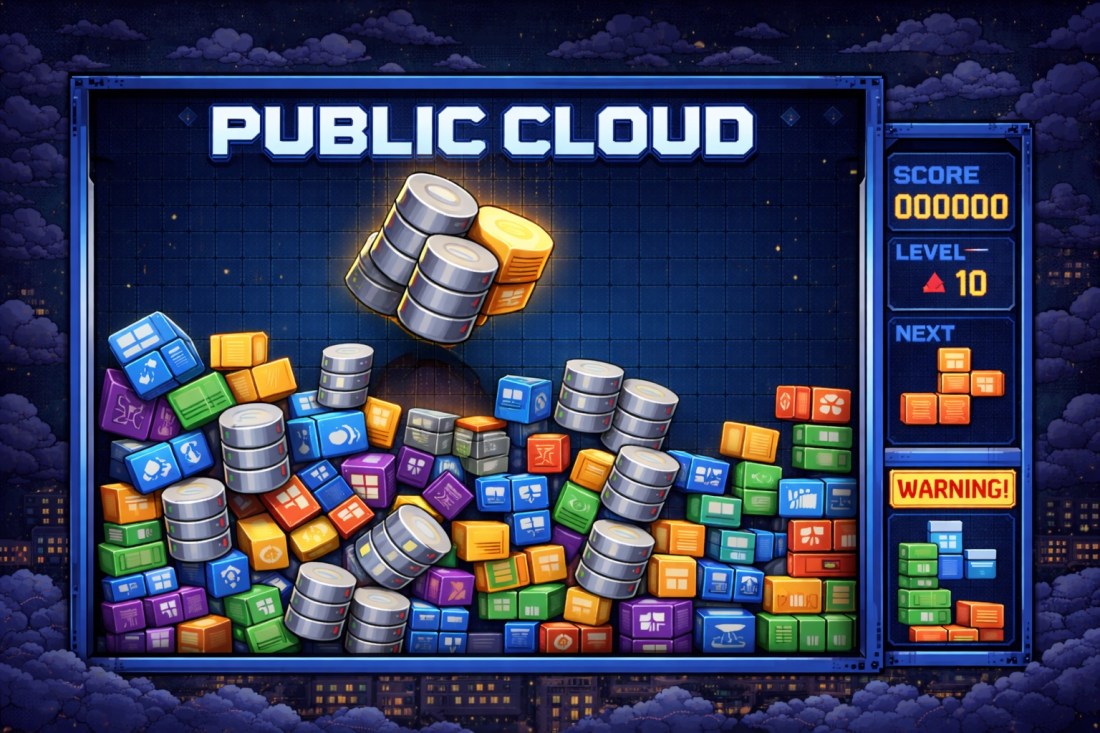
  4. How do databases perform in the public cloud?

Now, I’m writing this in mid-2020, in the middle of the global COVID19 pandemic. The article, which is a year old and so pre-COVID19, makes the prediction that this will come true within the next two years. It doesn’t allow for the possibility of a total meltdown of society or the likelihood that the human race will be replaced by Amazon robots within that timeframe. But, on the assumption that we aren’t all eating out of trash cans by then, I think the four questions above need to be addressed.

Questions 1, 2 and 3 appear to be the domain of the authors of this Gartner report. But question 4 opens up a whole new area for investigation – and that will be the topic of this next set of blogs. But let’s finish reading the Gartner notes first, because there’s more:

“Cloud is now the default platform for managing data”

One of the report’s authors, long-serving and influential Gartner analyst Merv Adrian, wrote an accompanying blog post in which he makes the assertion that “cloud is now the default platform for managing data”.

And just to make sure nobody misunderstands the strength of this claim, he follows it up with the following, even stronger, remark:

On-premises is the past, and only legacy compatibility or special requirements should keep you there.

Now, there will be people who read this who immediately dismiss it as either obvious (“we’re already in the cloud”) or gross exaggeration (“we aren’t leaving our data centre anytime soon”) – such is the fate of the analyst. But I think this is pretty big. Perhaps the biggest shift of the last few decades, in fact.

Why This Is A Big Deal

The move from mainframes to client/server put more power in the hands of the end users; the move to mobile devices freed us from the constraints of physical locations; the move to virtualization released us from the costs and constraints of big iron; but the move to the cloud is something which carries far greater consequences.

After all, the cloud offers many well-known benefits: almost infinite scalability and flexibility, immunity to geographical constraints, costs which are based on usage (instead of up-front capital expenditure), and a massive ecosystem of prebuilt platforms and services.

And all you have to give up in return is complete control of your data.

Oh and maybe also the predictability of your I.T. costs – remember in the old days of cell phones, when you never exactly knew what your bill would look like at the end of the month? Yeah, like that, but with more zeroes on the end.

Over to Merv to provide the final summary (emphasis is mine):

The message in our research is simple – on-premises is the new legacy.  Cloud is the future. All organizations, big and small, will be using the cloud in increasing amounts. While it is still possible and probable that larger organizations will maintain on-premises systems, increasingly these will be hybrid in nature, supporting both cloud and on-premises.

The two questions I’m going to be asking next are:

  1. What does this shift to the cloud mean for the unrecognised but true hero of the data center, the DBA?
  2. If we are going to be building or migrating all of our databases to the cloud, how do we address the ever-critical question of database performance?

Link to Source Article from Gartner

Link to Merv Adrian blog post


The architectural challenges of running enterprise databases in the cloud didn’t disappear – they evolved. If you found this series useful, you might also be interested in Databases in the Age of AI, which examines how AI agents are now placing enterprise systems of record under a new kind of pressure.

Don’t Call It A Comeback

I’ve Been Here For Years…

Ok, look. I know what I said before: I retired the jersey. But like all of the best superheroes, I’ve been forced to come out of retirement and face a fresh challenge… maybe my biggest challenge yet.

Back in 2012, I started this blog at the dawn of a new technology in the data centre: flash memory, also known as solid state storage. My aim was to fight ignorance and misinformation by shining the light of truth upon the facts of storage. Yes, I just used the phrase “the light of truth”, get over it, this is serious. Over five years and more than 200 blog posts, I oversaw the emergence of flash as the dominant storage technology for tier one workloads (basically, databases plus other less interesting stuff). I’m not claiming 100% of the credit here, other people clearly contributed, but it’s fair to say* that without me you would all still be using hard disk drives and putting up with >10ms latencies. Thus I retired to my beach house, secure in the knowledge that my legend was cemented into history.

But then, one day, everything changed…

Everybody knows that Information Technology moves in phases, waves and cycles. Mainframes, client/server, three-tier architectures, virtualization, NoSQL, cloud… every technology seems to get its moment in the sun…. much like me recently, relaxing by the pool with a well-earned mojito. And it just so happened that on this particular day, while waiting for a refill, I stumbled across a tech news article which planted the seed of a new idea… a new vision of the future… a new mission for the old avenger.

It’s time to pull on the costume and give the world the superhero it needs, not the superhero it wants…

Guess who’s back?

* It’s actually not fair to say that at all, but it’s been a while since I last blogged so I have a lot of hyperbole to get off my chest.


The architectural challenges of running enterprise databases in the cloud didn’t disappear – they evolved. If you found this series useful, you might also be interested in Databases in the Age of AI, which examines how AI agents are now placing enterprise systems of record under a new kind of pressure.